How to stop AI making your scripts WORSE
March 13th, 2026
|
10
min read
If you've tried using AI to write YouTube scripts and found the outputs are rubbish - and that it can even take longer - listen up.
Because the truth is, AI is really good at completely ruining scripts.
And it's not because it's "not good enough yet."
It's because the way you're asking it to generate scripts is broken.
But I've spent the last four years systemising my scriptwriting process for hundreds of students and clients, and I now use a hybrid AI / human method to write scripts in under two hours.
So... here's why AI is ruining your scripts, and how to fix it.
The AI-mistake almost every YouTuber makes:
You might think that after giving ChatGPT/Claude a few examples of “gold standard” scripts + a personal writing style guide...
...you can simply ask it to generate full scripts from scratch.
And while having a style guide + past script examples are absolutely necessary for writing scripts with AI, they’re not sufficient.
Because writing a full script involves a tonne of different, complicated, interlocking steps.
The AI has to interpret your notes, build a structure, expand every sentence in your voice, check that expanding those sentences doesn't break the structure, audit your hook, check for stakes… all at the same time.
It’s too much. And even AIs with higher token counts like Claude and Gemini will struggle to do these tasks to a high standard.
The solution, then, is to create your scripts in stages with AI.
Here’s the process I’ve been following with Claude recently...
Stage 1: Brainstorm collaboratively
Asking AI simply to "create the structure" for a video leads to disaster.
I’ve found AI consistently creates the "most logical" sequence possible… which might seem ok at first, but rarely holds up to closer inspection.
So instead of asking AI to hand you a complete structure, have a conversation:
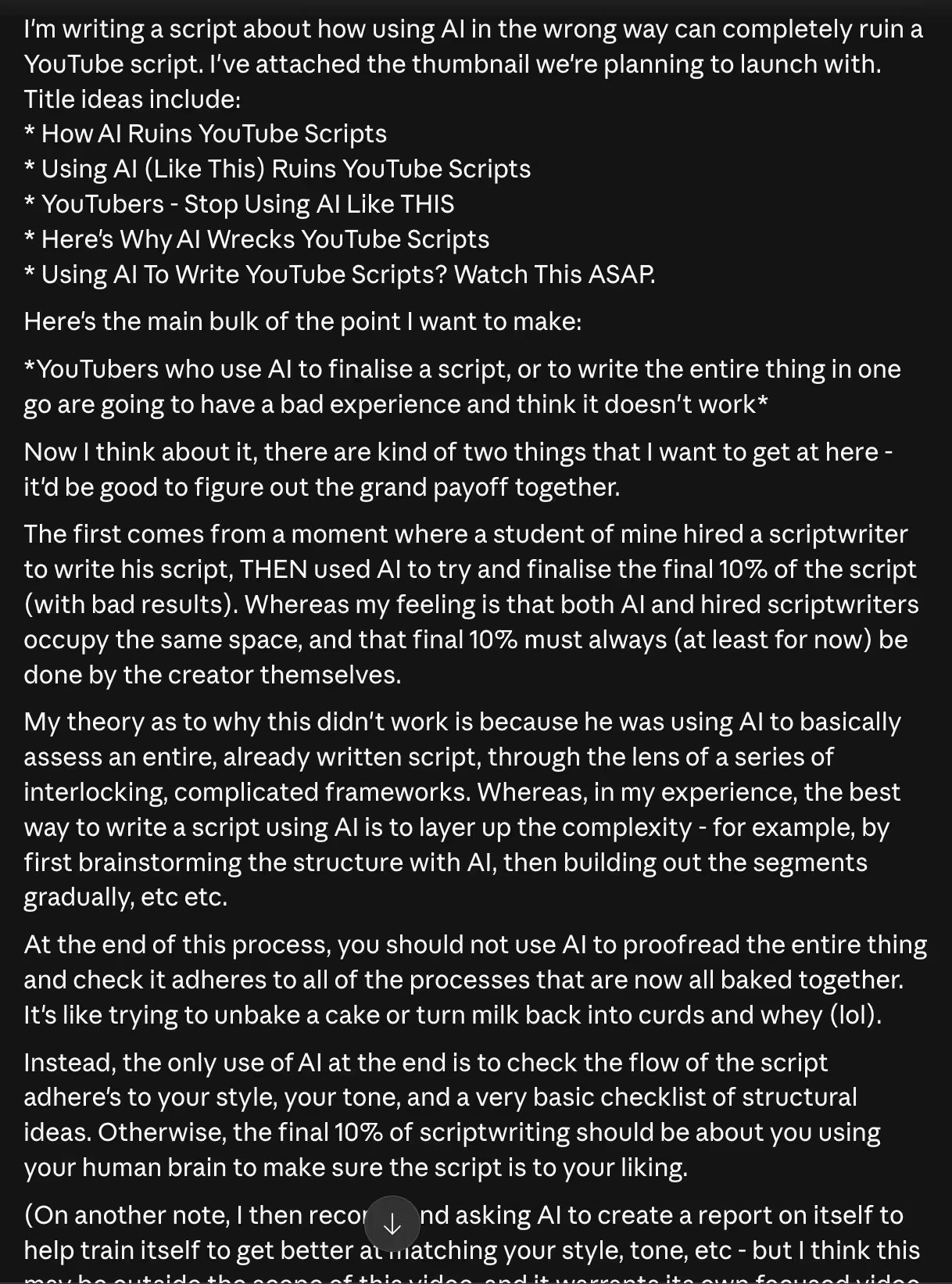
Keep it flexible and free-flowing... there is no "right" way to do this part.
- Pass the AI your titles ideas.
- Discuss your core idea, and the different angles of approach you could take.
- Be honest about any blindspots or uncertainties.
Gradually, you'll settle on your angle of approach, and find your way towards a mutually agreed-upon structure.
Let the structure emerge from that back-and-forth, rather than a single prompt.
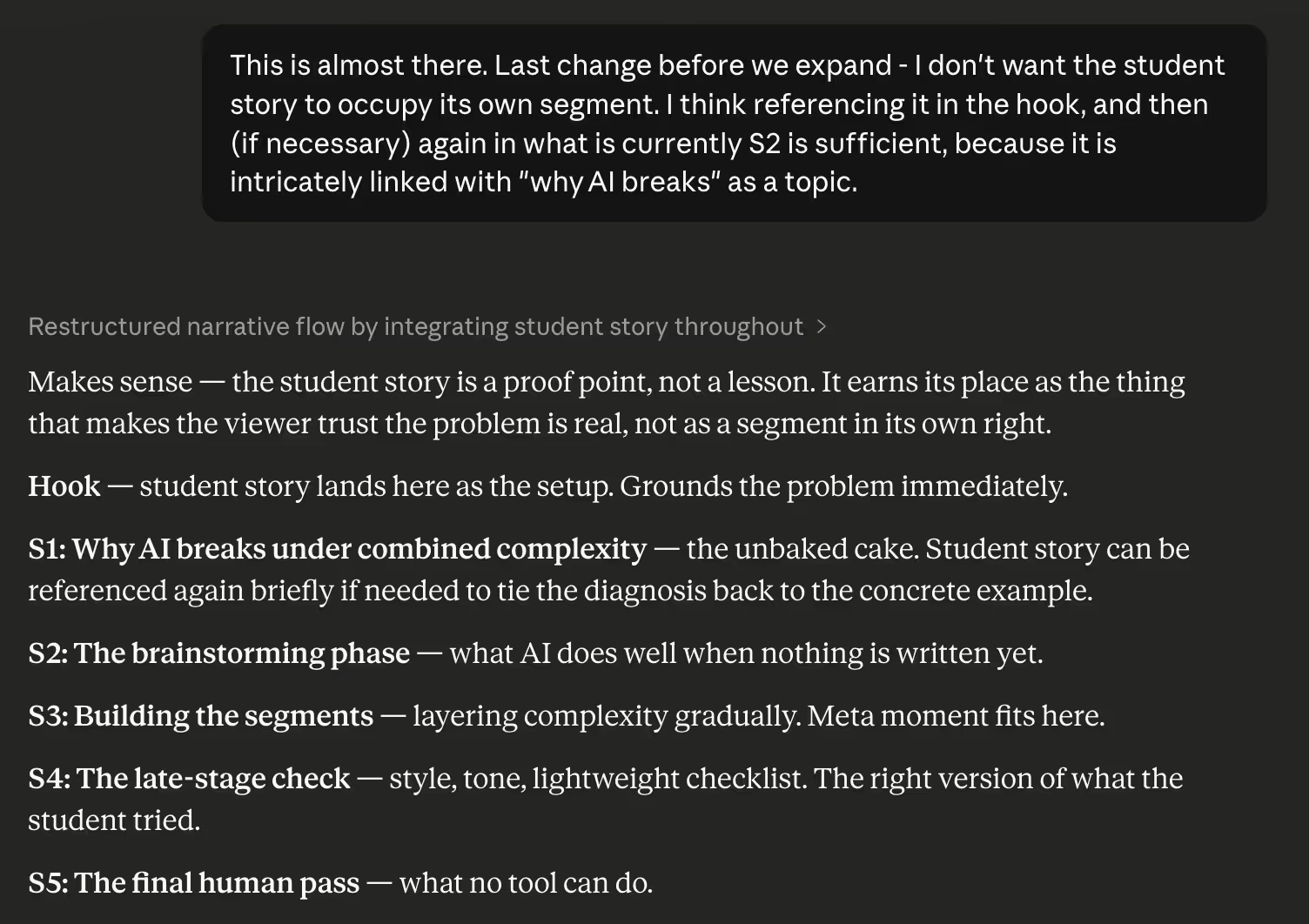
Stage 2: Write one “phase” at a time
This is the same principle I teach for writing scripts manually.
Writing a whole script from start to finish is overwhelming, and the quality suffers without a step-by-step system.
That’s why (as you may know) I always start by writing just the payoffs, word for word.
Then the setups. Then the tension. Then the hook and CTAs.
With AI, your approach should be no different.
Ask it to generate just the payoffs at first, then provide feedback.
Are they in a logical order? Are they individually compelling? Are they too similar to each other?
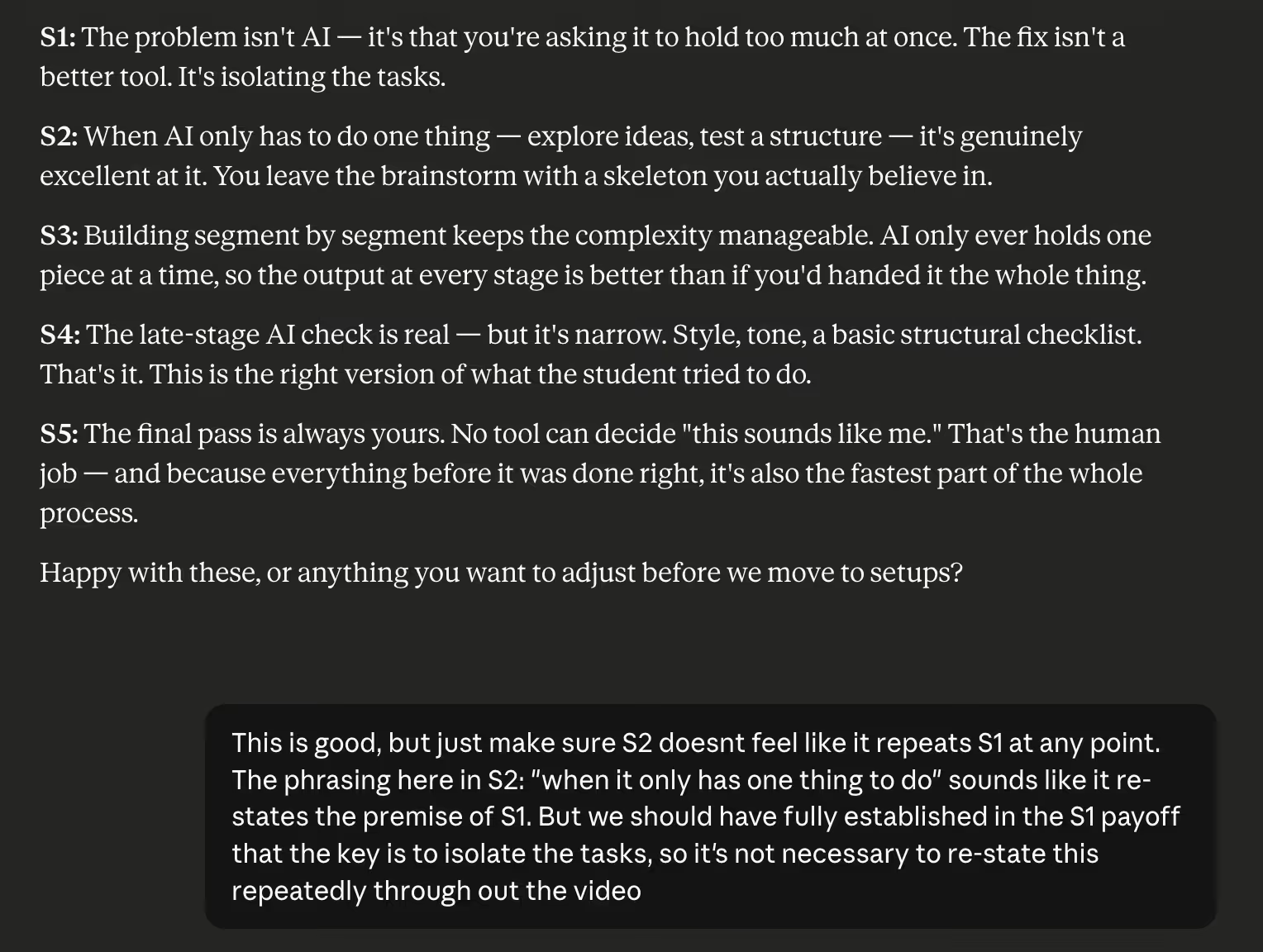
Once those are locked, move to the setups. Then the tension. Then the hook and CTAs.
This gives you the continuous ability to course correct… before the AI goes off and writes something insane.
Now you have your V1 script… but it’s not going to sound right just yet.
Stage 3: Rewrite segment 1, then ask AI to learn from your edits
This is where it gets really powerful.
Rewrite segment 1 to your liking - after all, the AI won’t have written it perfectly.
Then paste your re-write back into the chat, and ask AI to rewrite segment 2 while focused on:
- What it learned from your segment 1 re-write.
- Your style guide.
The second point is extremely important.
I’ve found, even with my style-guide pre-loaded into my scriptwriting project on Claude, it forgets to adhere rigorously to it as the chat gets longer.
Repeat this process across the entire script - re-write segment 2, and tell the AI to learn from it when re-generating segment 3.
Etc, etc.
Each subsequent segment will get closer and closer to your style.
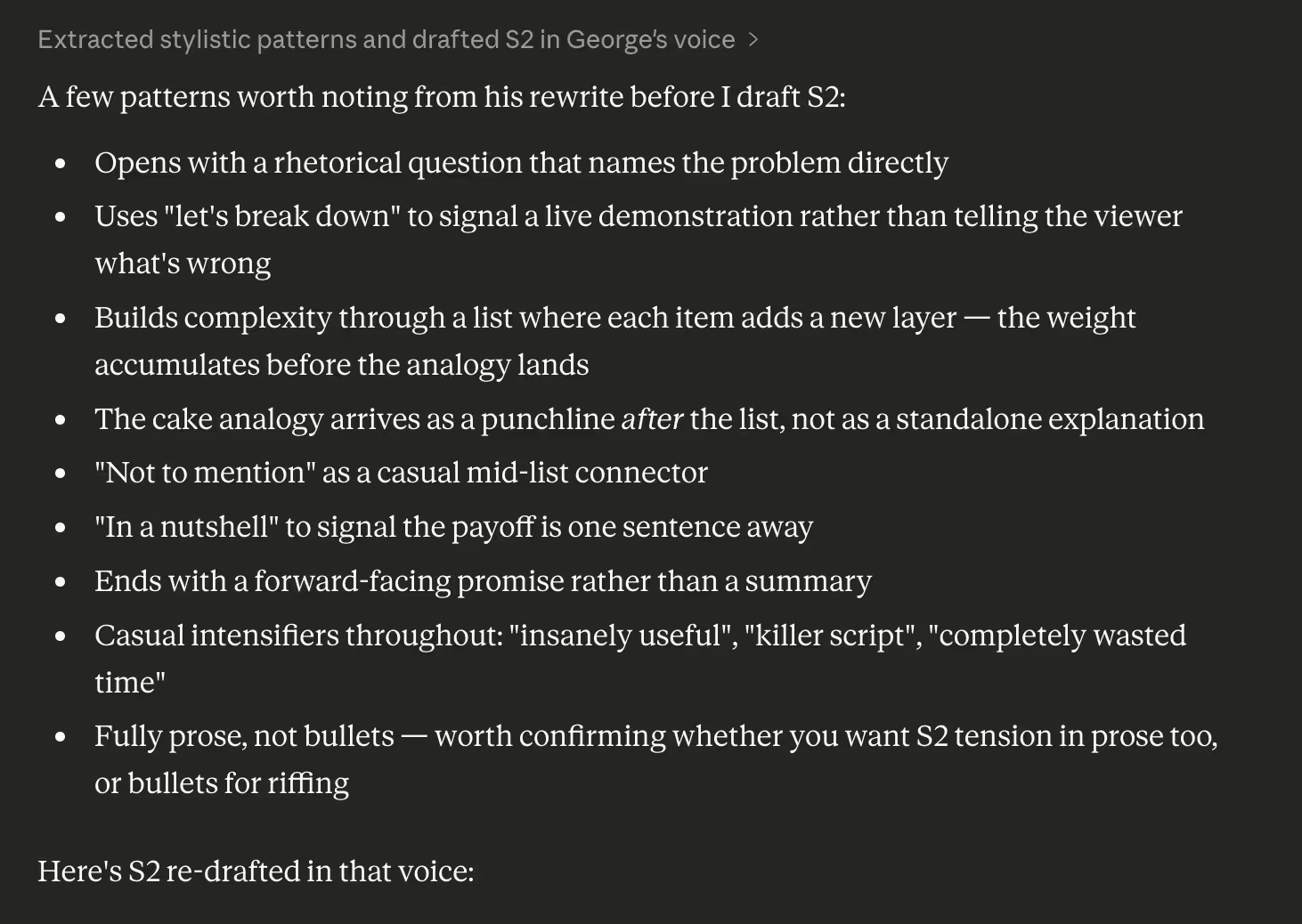
Stage 4: The final pass
Asking AI to do a "final check" of the whole script is, once again, too broad.
You're basically asking it to "unbake the cake" and check whether all the frameworks, structures, tonal references (etc) are up to standard.
In my experience, this leads to the AI making bad suggestions.
So accept, if you can, the need to use your human brain for this part.
Read the script back to yourself, out loud if possible, and fix anything that sounds off. After everything you've just done, this part shouldn't take long.
Not only does this give you final oversight on the script...
...but it means you'll always provide the AI with a little more data about your writing preferences.
Data you can then ask it to learn from next time you write together.
In an upcoming newsletter, I’m going to give you my exact system in Claude for capturing that data and feeding it into your next script.
That's all for this week.
Any questions? Reply to this email and I'll get back to you.
Speak soon,
George 👋
Create more engaging videos with simple, actionable scriptwriting tips.
Join 6,000+ scriptwriting nerds reading “Write On Time”. Insights from writing for multi-million subscriber YouTubers sent to your inbox every Friday.