The retention killer ignored by most YouTubers
January 16th, 2026
|
10
min read
Before recording your next video, I want you review your script and ask this question:
“How easily can I picture this?”
Or, to be precise, “how easily can my viewers picture this?”
The truth is, this question has a significant impact on retention, yet I’ve worked with dozens of clients, students, and agencies who ignore it.
So, using some simple examples, let me show you why this matters, and how easily you can implement it.
But before we get into it...
LAST TICKETS LEFT
Get 6 months of YouTube strategy in 8 hours.

We’re running an intensive, one-day event for entrepreneurial YouTubers to help you nail the 3 core aspects of a successful YouTube channel:
- Strategy & Packaging (hosted by Jamie Whiffen)
- Scriptwriting & Retention (hosted by me!)
- Systems & Production (hosted by Gwilym Sims-Williams)
Our goal?
To help you make more strategic YouTube progress in one day than you would in 6 months.
Last Tickets Left, Grab Yours Here
In addition to our keynote sessions, Q&As and implementation sessions, I'm excited to announce our sponsor!
Justin Moore: Author of Sponsor Magnet
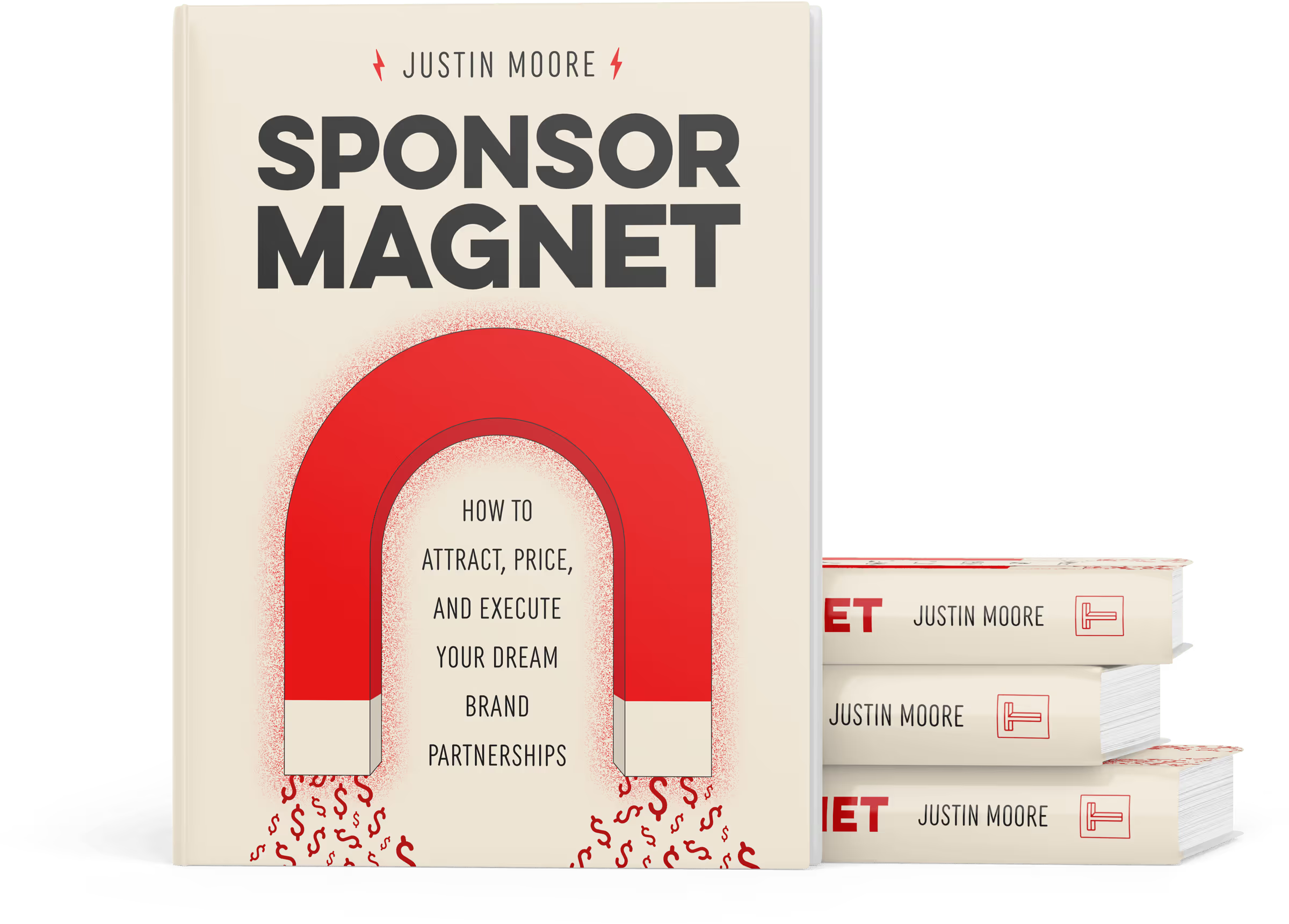
Attendees will receive a free copy of Sponsor Magnet plus the following exclusive offer from Justin:
Join a "sponsorship diagnosis call" with one of Justin's team:
- Assess your channel/socials/business.
- Pinpoint roadblocks preventing you from landing lucrative deals.
- Identify opportunities to drive more revenue through sponsorships.
Thanks again to Justin for sponsoring the YouTube Breakthrough Intensive!
To learn more about the event and claim your spot, click here:
Last Tickets Left, Grab Yours Here
So, back to that key question...
"Can my viewers easily picture what I described?"
First, let’s see what happens when the answer is "no" in a hook:
“If you’re a business trying to grow on YouTube, you can’t afford to make videos that don’t resonate.
They need to appeal to customers fast… but it’s difficult to achieve this when you’re so focused on the day-to-day of running your company.
So in this video, I’ll show you how to make more content that attracts your ideal clients, without getting overwhelmed.”
When you read this, how do you feel?
To me, this sounds extremely flat. After all:
- What does a video that “doesn’t resonate” actually look like?
- I don’t know what “appealing to customers” means, except in the broadest sense. And how “fast” do I need to do this?
- I’m not even sure the issue is that I’m too busy “running my company”, but even if it were… what sort of tasks might I be doing that get in the way?
- “More” content? How much more?
- “Overwhelmed” is buzzword-y. How does this look and feel?
Compare that to this re-write:
“If you’re a business trying to grow on YouTube, you can’t afford to make videos that look like this anymore. [Show a visual example; grounds the explanation in something I can picture.]
Because the truth is, if your viewers aren’t hooked by your videos in the first 30 seconds, they’ll never become customers and you’ll struggle to make consistent sales.
So in this video, I’ll show you how to 2x the number of videos you make per month to generate more leads… without spending hours brainstorming new video ideas.”
How did that feel by comparison?
To me, I found myself imagining much more specific imagery:
- By showing what we meant in the first sentence, we leave the viewer in no doubt what we’re talking about.
- I can picture a viewer being “hooked” by a video, and there’s now a specific timeframe as well.
- I can feel the pain of “not making sales”.
- I can picture making “2x” the number of videos per month.
- I can picture the stress of having to spend hours I don’t have “brainstorming new video ideas”.
So that was a hook.
But what does this look like during your “setups”?
Setups:
A "setup" is effectively a re-hook every 1-2 minutes as you begin discussing a new topic.
Just as your main hook is designed to convince viewers to watch the video…
…your setups are designed to reinforce this, giving the viewer clarity about what they’re going to learn next.
And the keyword there? Clarity.
Imagine if I started a segment like this:
“Imagine playing rock-paper-scissors with a monkey. Who’s more likely to win - you, or it? The truth is, it’s more likely that the monkey won’t understand the rules and will probably just scream in your face and throw faeces towards you. And this teaches us something very important about making videos on YouTube…”
Ok, I had some fun with that one. And, sure, I can picture the monkey throwing its poo at me.
But can I picture the benefit of this segment?
Do I have clarity about what I’m going to learn?
Have I stopped thinking about the reason I actually clicked the video because now all I can think about is monkeys?
No. No. Yes.
Now, I’m not saying metaphors don’t have their place (and, as you’ll see below, we don’t even have to cut this one out).
But we do not want to use a metaphor during a “setup”.
Check out this re-write and you’ll see why:
“First up, we need to understand the main reason most business-focused YouTubers struggle to upload consistently, because it’s probably what’s holding you back too. And until we unpick this habit, I guarantee you’ll never start to make more sales.
To explain this, I want you to imagine you’re playing rock-paper-scissors with a monkey…”
Do you see how different this feels?
We can still use the exact same metaphor, but we simply move it until after the setup.
This means we kick off the segment using stake-heavy language that I can easily picture.
Now, our viewers can clearly understand what they’re going to learn in the next 1-2 minutes.
And the metaphor becomes a vehicle for explanation, rather than curiosity.
Try this, and see what happens to your retention during both the hook and each time you begin a new topic.
That's all for this week.
Speak soon,
George 👋
Create more engaging videos with simple, actionable scriptwriting tips.
Join 6,000+ scriptwriting nerds reading “Write On Time”. Insights from writing for multi-million subscriber YouTubers sent to your inbox every Friday.